POINTS BY BEACH MINERALS PRODUCERS ASSOCIATION TO FIMI

POINTS BY BEACH MINERALS PRODUCERS ASSOCIATION TO FIMI FOR SPECIFIC FOCUS ON BEACH SAND MINERALS SECTOR FOR CONSIDERATION OF NITI AYOG’S WORKING GROUP RELATED TO MINERALS SECTOR .


BACKGROUND:

The Beach Sand Minerals (BSM) occur together and consist of ilmenite, rutile, leucoxene, zircon, garnet, sillimanite and monazite. mining  of BSM in India is more than one hundred years old. BSM occur as placer deposits along the costal stretch of our country are the sources of titanium, zirconium, thorium and rare earths in the country. India presently imports titanium, zirconium and rare earths and components made of rare earth elements (REEs). The individual mineral contents vary from location to location. India has 35% of the world reserves  of these minerals.  Despite the  abundant reserves, known for more than one century, the production to reserve ratio of the country is a meagre 0.0018 against the global PRR of 0.01.  Developing this sector therefore will give  a strong focus in the development of a “NEW INDIA”.

CURRENT SCENERIO:

The government of India introduced the “Policy on Beach Sand Minerals” in 1998, pursuant to National Mineral Policy in 1991, as a positive step, opening up the sector to private participation. The delisting of  the titanium and zirconium bearing minerals from the list of prescribed substances with a recommendation to the ministry of mines(MOM) to remove these from the list of atomic minerals vide S.O. 61(E) dated 18-01-2006 with effect from 01-01-2007 or from the date of amendment to the MMDR Act, whichever is earlier gave further thrust.

Unfortunately, the MMDR Amendment Act 2015 did not take cognizance of these recommendations and instead  took the retrograde step of including even garnet and sillimanite as Atomic minerals which were never  in the list of schedule minerals or Atomic Minerals.

The introduction of AMCR 2016 unilaterally without discussion with stake holders restricting private sector participation by introduction of threshold value and reservation to public sector which denies a level playing field and annuls the policy of 1998 was another retrograde step by the MOM. The fixing of threshold value as 0.75% of monazite in THM is irrational as thorium content of monazite is only 8% which translates to 0.06% of thorium in THM. Putting the future of the BSM mining in the country based on the threshold value denies the opportunity to extract and produce the rare earths the content of which is 65% in the monazite mineral and the development of other associated strategic minerals.

AMCR 2016 restricts exploration by private entities. This contradicts the MMDR Act which permits private sector to carry out prospecting and is against the principle of natural justice.

The recently amended MMDR Act has a provision for reservation to public sector companies especially the creamy layers. Such reservation denies a level playing field to private sector companies especially and is opposed to the very spirit of the 1998 policy which encouraged and invited private sector investment in the beach minerals sector. This provision will totally hamper the growth of the BSM mining in the country

SUGGESTIONS TO MOVE FORWARD:

  1. Necessary legislative changes to remove BSM from the category of atomic minerals from part B of schedule of MMDR Act and categorise them under a separate part C as envisaged in the draft MMDR Act 2011.
  2. Private sector companies also may be permitted in mining, separation and further processing of all minerals including monazite by removing the restrictions based on threshold value limits. Suitable safeguards for handing over the thorium and uranium values to government/ nominated agency may be devised.
  3. India has 70% of world monazite reserves of the world, but imports 100% of its needs of rare earth and rare earth based components presently. Rare earths are strategic and critical materials needed by mankind in everyday living apart from strategic uses in magnets, aerospace, medical, clean technologies, automobiles and electronics. Development of the rare earth production business in India will not only make India self sufficient, but also spin off several downstream manufacturing businesses creating a platform for capital investment, employment creation under the “Make In India” program.
  4. It is a known fact that China controls over 95% of world’s rare earth supply and total dependence on China by the world is undesirable. Consequently, at present developed nations of the world are looking for alternates and substitutes for REEs. Now is the opportune moment for India to focus on rare earths production and become a leading player in REEs as otherwise India’s REE sources may loose relevance in course of time.
  5. If private sector is given a level playing field in the BSM sector and India can expand to achieve the PRR of 0.01, and value add all minerals and develop down stream industries utilising the value added products, it is estimated that such a growth in this sector would attract capital investment of over 1.00 lakh crores and create job opportunities for over a million people in India.
  6. Review the Reservation as per 17A of MMDR Act to Public Sector Units.
  7. If auction route is to be adopted, there it must be preceded by a techno-economic shortlisting of the interested applicants.
  8. Considering the “zero waste” principle, necessary modifications are required to be made in the rules to not only include all the suite minerals in the Lease deed, but also to incentivize exploitation of as many of them as possible.
  9. Most of the mining projects are not materialising due to want of Forest Clearance. Some of the areas covered under Reserved Forest require relook and denotification and if the mineral rich areas are not biologically rich, the same shall be considered for denotification.
  10. Blanket restrictions may be removed and permission to mine the deposits should be allowed in ecologically sensitive areas, except where scientific studies and recommendations of experts in the field indicate restrictions to be imposed if any, as also the specific precautions to be taken to fully protect the Environment, including endangered/ scheduled species of Flora and Fauna like the Olive Ridley Turtles during their annual breeding visits.
  11. As in vogue in developed countries, mining of BSM deposited regularly in the intertidal zone shall be allowed.
  12. In order to encourage exports, no export duty shall be levied for any BSM products.


Complaint of export of monazite by Private Beach Mineral Companies all are false – Tuticorin Customs confirmed this.

Tuticorin Customs Commissionerate is the In-Charge for  export and Import through Tuticorin Port. The Customs Commissioner confirm that, no export of Monazite, Uranium and Thorium for the last 10 years. This will establish that, there is vested interest to make false complaint against Beach  Mineral Industries.


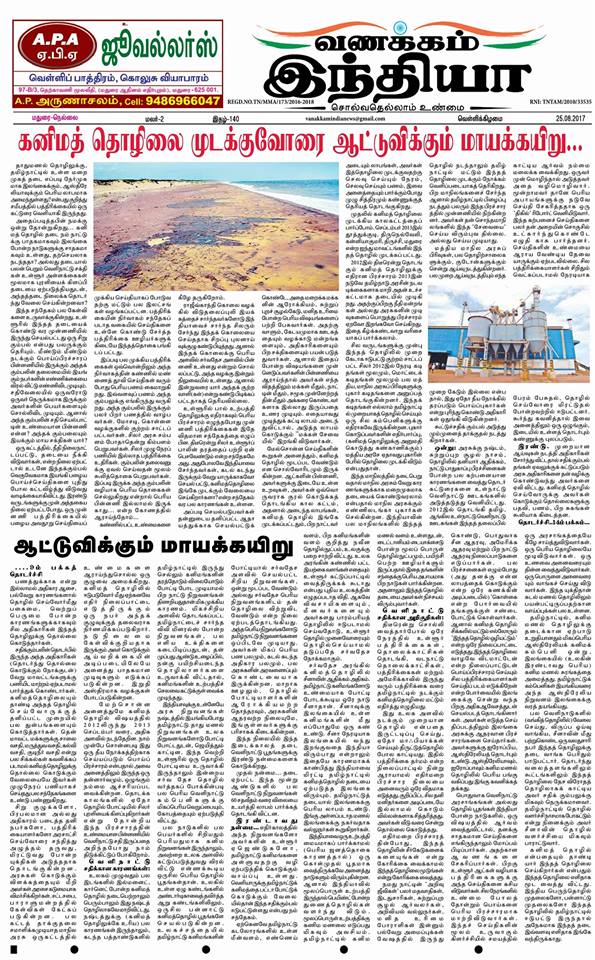
கனிம தொழிலை முடக்குவோரை ஆட்டுவிக்கும் மாயகயிறு…


நன்றி வணக்கம் இந்தியா 25.08.2017

Beach Mineral mining is not a cause for cancer. 70% of Colon cancer cases found in North India. Deccan Chronicle publish the fact.

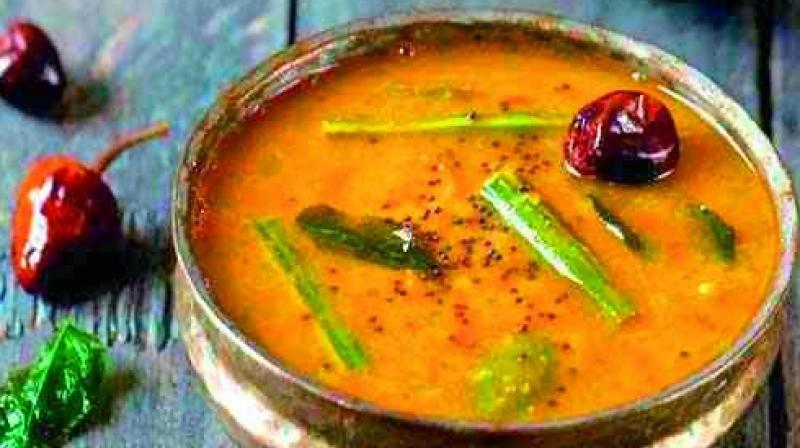
Deccan Chronical published on Article in the heading of Food cure. They have highlighted that 70% of Colon cancer cases found in North India. They further reveal one more fact that, our daily usage food Sambar, which is combination of spices and fibrous vegetables  found to heavy Anti-Tumorigenic properties. This will establish that, the propaganda against beach mineral mining is a pre-planned one with ulterior motive.


Food cure: How sambar can prevent colon cancer

DECCAN CHRONICLE. | INDULEKHA ARAKKAL

PublishedAug 13, 2017, 2:20 am IST
Sambar is not spicy, doesn’t affect the intestine lining and stops the development of carcinogen.

Sambar, that most popular of south Indian curries, has been proved to prevent colon cancer and medical experts say that it is the mixture of spices in the sambar powder that contributes to its effectiveness.

 Sambar, that most popular of south Indian curries, has been proved to prevent colon cancer and medical experts say that it is the mixture of spices in the sambar powder that contributes to its effectiveness.

Piping hot sambar is often suggested as a home remedy for various ailments by family elders and now we have a research by the Manipal University to validate the same. Sambar, that most popular of south Indian curries, has been proved to prevent colon cancer and medical experts say that it is the mixture of spices in the sambar powder that contributes to its effectiveness.

Sambar powder has anti-tumorigenic properties, that is, it counteracts the formation of tumours. Sambar powder consists of coriander seeds, fenugreek seeds, turmeric rhizomes, black pepper, curry leaves, cumin seeds and asafoetida. Dr S.V.S.S. Prasad, an oncologist, says that if properly made, sambar is a very nutritious dish. “The properties of the spices used helps bowel movement thereby reducing the risk of colon cancer. Sambar is not a spicy dish and therefore doesn’t affect the lining of the intestine and actually prevents development of dimethylhydrazine, which is a factor of colon cancer.”

Cancer Research Institute (CRI) of the Tata Memorial Institute, Mumbai, has conducted studies on the chemo-preventive action of agents from Indian foods such as turmeric. A senior researcher from the preventive oncology department says, “Instead of taking sambar as a whole, if we split it into components, we see the many benefits of all the ingredients that go into it. All the components facilitate good digestion which is crucial to prevent colon cancer.”

Instances of colon cancer are higher in north India. Medical experts claim that this is because of the prevalent diet, which consists of more wheat and that leads to constipation. The diet followed in South India, of rice and curry, supposedly helps in bowel movement. Dr T.P.S. Bhan-dari, an oncologist, says, “Seventy per cent of colon cancer cases are in north India. Tur-meric, which is an active ingredient in sambar powder, has anti-cancerous properties. It prevents the formation of free radicals which can be carcinogenic. South Indian curries and especially sambar, is cooked using primarily spices. In North India, we see more grilled food which has tar and free radicals due to the manner of its preparation.”

Sambar is prescribed by gastroenterologists not only for the spices but also for the vegetables added to it. Dr Vimalakar Reddy, gastroenterologist says, “Indian food is always rich in fibre. Sambar, especially, uses many vegetables like carrot, bitter gourd, ladies finger, drum stick, tomatoes and others, which have their own individual healthy properties, as do lentils that are also used in the preparation. The mix of spices and other ingredients leads to more fat absorption that increases motility and therefore can prevent colon cancer.” A diet high in fat and low in fibre often leads to colon cancer.

Ayesha Fatima, a nutritionist, says, “Although the study is very preliminary, the health aspects of sambar cannot be ignored which is why it is such a popular dish. Black turmeric and fenugreek that is added in sambar is said to reduce the risk of colon cancer. It prevents the effect on inflammatory mediators and prevents negative stress on colonic tissues.”

Link : http://www.deccanchronicle.com/decaf/130817/food-cure-how-sambar-can-prevent-colon-cancer.html

மினரல் தொழில் நாட்டின் அடையாளம்

ஏற்கனவே பல குற்ற நடவடிக்கைகளுக்கு உள்ளாகி அதில் இருந்த தப்பிப்பதற்காக நீதிமன்றத்தில் தன்னைத்தானே மனநோயாளி என ஒப்புதல் வாக்குமூலம் அளித்து இதுவரை தண்டனைக்குள்ளாகாமல் தப்பித்து வரும் குமரேசனின் உண்மை முகத்தை மக்கள் மத்தியில் தோலுரித்து காட்டி விட்டது “வணக்கம் இந்தியா” நாளிதழ்.


மினரல் தொழிலால் நாட்டிற்கும் பொது மக்களுக்கும் ஆபத்தா?

வளங்கள், வசதி வாய்ப்புகள் இருந்தும் மினரல் ஏற்றுமதி தடைகளால் வளர்ச்சியில் பின்தங்கும் இந்தியா

Government of India failed to utilize the monazite for the development of our nation. Here we explain How?

The Department of Atomic Energy (DAE) was reviewing the monazite policy . This is like putting the fox in charge of the henhouse for DAE have consistently worked to maintain their monopoly over the cracking of monazite and have also consistently used scare tactics about ‘atomic minerals’ in various forums as part of this effort.

The problem is that DAE, through Indian Rare Earth, have had this monopoly now for 60 years or more and have done nothing with it. In fact just when China started to move on expanding their Rare Earth sector in the early 2000’s DAE shut down their monazite cracking operation in 2004. They have consistently shown that they are not capable of understanding the Rare Earth market worldwide or of the opportunity that India currently has and has had for some 17 years or more.

Further Government of India Company, Indian Rare Earths Limited (IRE) have failed to deliver their agreed tonnages of material to the Toyota operation in Andhra Pradesh despite having now had some 8 years to get their operation up and running. Toyota are now importing product from Estonia to fill their plant due to the failure of IRE to perform. The extremely poor performance of IRE in this project is well known in the industry worldwide and there is no-one that we know of that would contemplate working with IRE following this ongoing debacle with Toyota.

It is a complete and utter lie that private parties interested only to want to export monazite. In fact, three Indian companies  approached Department of Atomic Energy for production of Rare Earth even seven years back.   But even after Modi Government came to power, they did not implement “MAKE IN INDIA” Scheme in this Rare Earth segment.

There is no market for monazite worldwide at the moment for there are no facilities worldwide at the moment that can in fact process monazite outside of China and they do NOT need any more Rare Earth as they have their own resources. However Department of Atomic Energy and IRE Ltd, purpose fully spread rumours that, private parties want to export monazite to other countries. This is just needs to maintain their control and watch over the monazite stockpiles or concentrates to ensure it is not exported and they could still allow processing in India. This statement is actually complete rubbish.

What it means for India’s future if vested Government interests can hold the country back just to protect their own little empire. If India is to become an economic powerhouse these vested Government interests need to be swept aside.


தாது மணல் தொழிலின் உண்மையான பிரச்சனையை உலகிற்கு வெளிப்படுத்த முயற்சிக்கும் “வணக்கம் இந்தியா”-விற்கு எங்களது வாழ்த்துக்கள்

Some FAQ about mining in GST – Govt., clarification published for our members reference

GST faq-mining