Timely need action.

Last 20 years we made the same request, but Government did not consider. Now due to the China threat on Rare Earths supply, now Government is in a compulsion to re-open the same.

Though part of the action is to help a big North India private company, this is a good move for our nation. Media news for members and general public information.

********

Why India’s vast monazite resources should be opened to private-sector mining
Monazite is currently a prescribed material under India’s Atomic Energy Act, 1962. This designation restricts it to the monopoly of Indian Rare Earth Limited (IREL).
Monazite is present in India's beach sands.
Monazite is present in India’s beach sands.

The Union Budget speech has proposed to support the mineral-rich states of Odisha, Kerala, Andhra Pradesh and Tamil Nadu to establish rare earth corridors and promote mining, processing, research and manufacturing. Prior to this, the Indian government seemed to be signalling a willingness to engage private players in exploring India’s vast beach sands and monazite resources. If implemented, this is a welcome step for India’s critical mineral security, as it unlocks the potential of monazite’s constituent light rare-earth oxides (REO) for private-sector investment.

Monazite, present in India’s beach sands, is currently a prescribed material under India’s Atomic Energy Act, 1962, because of its around 10% thorium and trace uranium content. This designation restricts it to the monopoly of Indian Rare Earth Limited (IREL).

However, limiting private participation to just the exploration process, leaving mining untouched, is unlikely to spur any meaningful activity. Exploration is typically incentivised by the preferential right to mine. Without that, the upfront capital risk required and the long exploration timelines contingent upon which exploration firms earn their revenues, are sure to deter prospects.

Additionally, junior explorers — smaller firms with niche technological capabilities — in other jurisdictions are allowed to sell their discoveries to larger operators at competitive market rates. This is a less lucrative option when there exist state mining monopolies.

Hence, for reform to truly take shape, India must pair exploration liberalisation with a regulatory overhaul that treats monazite as a dual-use ore and allows beach sand mineral (BSM) mining by private players under a tightly enforced licensing regime.

The numbers speak for themselves. India’s beach and inland placer deposits of monazite across eight states are capable of yielding 7.23 Mt (million tonnes) of REO (Rare Earth Oxides) dwarfing the 1.29 Mt in-situ REO in the hard rock deposits of Gujarat and Rajasthan. At higher REO concentrations of 55-60%, monazite offers an enormous grade advantage over alternative ores.

Additionally, beach sand is a mechanically concentrated ore wherein wave currents wash away light quartz sand, leaving behind heavy minerals ripe for extraction. This makes mining of beach-based monazite an extremely cost-effective process involving dredging and simple gravity/magnetic separation, as compared to conventional drilling, blasting, and chemical processing in land-based ores, which require higher power.

Evidently, it is the thorium content and, consequently, monazite’s radioactive nature that stand in the way. India holds around 25% of the world’s thorium reserves and has only low-grade, small uranium reserves, making thorium key to India’s nuclear programme. Still, these are experimental and not commercial-grade projects. With no spot market and much thorium tied up in R&D or strategic stockpiles, its national security halo must not block PPP models that ensure government access to thorium while the private sector leads beach sand mining.

Monazite’s radioactivity categorises it as a naturally occurring radioactive material (NORM) by the International Atomic Energy Agency, in that it is treated as a regulated substance, not industrial-grade material. Hence, by international standards, it is also not subject to the high controls applicable to nuclear fuel. Proven and mature physical safeguards during its mining, separation, transportation, and storage would effectively mitigate its radioactivity risk.

None of this is news for India, and in fact, critics of allowing BSM to be mined by private players reference the period between 1998 and 2019, when this was allowed.

In 1998, private BSM mining was allowed under a licensing regime (except monazite) to maximize domestic/foreign participation. In 2016, following the 2015 amendment to the Mines and Minerals Development and Regulation Act, the Atomic Mineral Concession Rules (AMCR) brought all BSMs onto the atomic minerals list. A threshold of 0.75% monazite was introduced, with only government-controlled firms allowed to work in the BSM deposits above that level. This was reversed in 2019, when the AMCR was amended to set a 0.00% threshold, effectively barring private-sector mining of any beach sand deposit containing monazite of any grade.

This reversal was triggered by illegal mining in several pockets of the country, particularly Tamil Nadu. This included mining without valid clearances and beyond permitted sites, or in violation of coastal zone related compliance – an important concern given these are ecologically fragile ecosystems. However, the bigger issue was the leakage of monazite which arose from a fundamental flaw in the policy.

Miners had to store separated monazite in DAE-approved concrete-lined pits, submit quarterly accounts and allow inspections. Since monazite was banned for commercial activity, including to the state, and was still valuable for its thorium and REO content, a black market for it emerged, with some exported illegally, misdeclared as zircon or ilmenite, or just stockpiled in private godowns without safeguards. This sparked national security concerns, and instead of tightening regulations or considering policy changes, the government chose a blanket ban on private sector involvement.

One way this could be solved is by the IREL rolling out an offtake policy for monazite at a price floor above its market price. Post-cracking monazite and separating thorium, the processing of the residual REO could involve licensed private players, including foreign companies from Japan and South Korea, partnerships that IREL is currently exploring. This guaranteed procurement policy for monazite could potentially incentivise its compliant storage while allowing commercial activity and value addition in other BSMs to take off. This would also help IREL with the feedstock required to expand REO production.

This model, in which IREL continues to be embedded in the monazite value chain while being supported with market incentives, will help curb the mineral’s leakage. This bodes well for the radioactive concerns associated with these substances as well. The capex costs required for monazite processing, thorium handling, and radioactive waste management, along with the economies of scale and environmental scrutiny therein, may still work best under government control. The costs incurred in the monazite procurement should not be seen as a liability, but an asset which can help India gain foreign policy leverage by becoming a key node in the global mineral supply chain to counter Chinese dominance.

India must explore such models within a tight licensing regime to combat the rampant cronyism and corruption seen in the pre-2019 era. A phased approach of transitioning away from the complete ban on private sector activity should be adopted, starting with pilot zones with strict oversight, short-term permits, and clear exit clauses, considering existing concerns. These deliberations are essential to the Indian national interest. The current ban may be convenient, but it is a blunt instrument that stifles progress, throwing the metaphorical baby along with the bathtub.
Source : https://www.newindianexpress.com/nation/2026/Feb/04/why-indias-vast-monazite-resources-should-be-opened-to-private-sector-mining


The Minerals Security Partnership (MSP) is a collaboration of 13 countries and the EU to catalyze public and private investment in responsible critical minerals supply chains globally.

Minerals are essential to the global economy and to the technologies powering the clean energy transition.  Diverse, secure, and sustainable supply chains for critical energy minerals are vital to deploying these technologies at the speed and scale necessary to combat the climate crisis.

The Minerals Security Partnership (MSP) aims to accelerate the development of diverse and sustainable critical energy minerals supply chains through working with host governments and industry to facilitate targeted financial and diplomatic support for strategic projects along the value chain.  MSP partners include Australia, Canada, Finland, France, Germany, India, Italy, Japan, Norway, the Republic of Korea, Sweden, the United Kingdom, the United States, and the European Union (represented by the European Commission).

The MSP considers projects along the full clean energy value chain, from mining, extraction, and secondary recovery, to processing and refining, and ultimately to recycling.  The MSP focuses on the minerals and metals supply chains most relevant for clean energy technologies.  These include – but are not limited to – lithium, cobalt, nickel, manganese, graphite, rare earth elements, and copper.

About the MSP

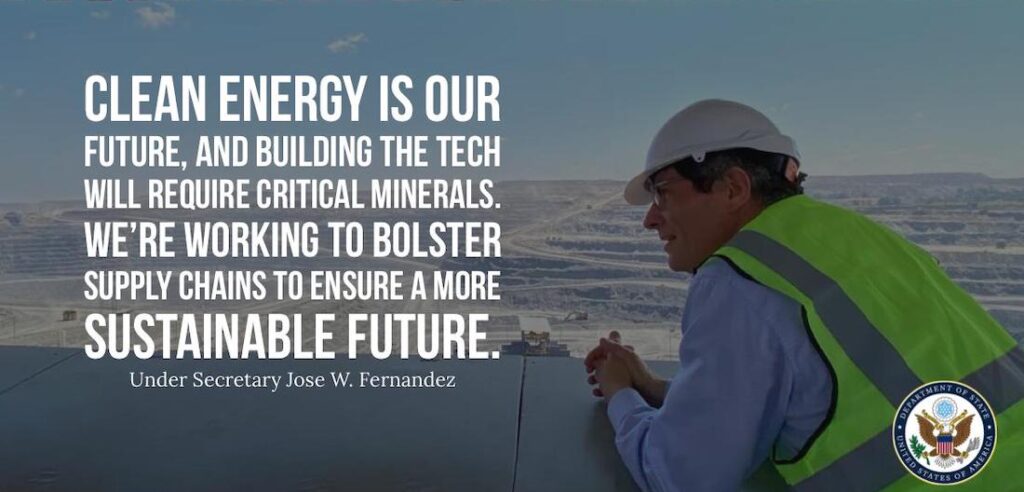
Under Secretary of State for Economic Growth, Energy and the Environment Jose W. Fernandez explains the goals of the MSP.

Country Partners

Australia, Canada, Finland, France, Germany, India, Italy, Japan, the Republic of Korea, Norway, Sweden, the UK, U.S., and the EU.

Principles

MSP partners strive to elevate environmental, social, and governance (ESG) standards across the global minerals sector.  The MSP commits to support only those projects that meet high, internationally recognized ESG standards, promote local value addition, and uplift communities, in recognition that all countries can benefit from the global clean energy transition.  Projects supported by the MSP will adhere to rigorous ESG standards throughout the project lifetime.  Further information on the MSP’s principles can be found in the MSP partners’ public statement, “Principles for Responsible Critical Mineral Supply Chains.”

Under these basic principles, the MSP will support projects that:

  • Demonstrate responsible stewardship of the natural environment;
  • Engage in consultative and participatory processes regarding land access and acquisition;
  • Commit to meaningful, ongoing consultation with communities;
  • Ensure safe, fair, inclusive, and ethical conditions in the community and the workplace;
  • Provide economic benefit for workers, and local communities; and
  • Ensure transparent, ethical business operations.

The MSP aims to use partners’ economic and diplomatic engagement and other forms of support to make strategic critical minerals projects more likely to succeed where appropriate for host governments.  The MSP commits to consult frequently and transparently with countries that are not MSP partners, particularly those with significant mineral reserves and those that aspire to move up the critical minerals value chain, to evaluate how best to support responsible commercialization of mineral resources.  MSP activities will advance the economic objectives of all countries involved.

Framework

The MSP operates through a collection of project-focused working groups that engage project proponents, evaluate project compatibility with ESG standards and MSP strategic objectives, and assess potential modes of MSP support. MSP partner governments engage across a wide range of agencies and departments, including those responsible for foreign affairs, economy, energy, trade, development finance, and export finance. The MSP is assessing more than a dozen minerals projects around the world, across several commodities and stages of the value chain, including processing and recycling projects. The MSP partner governments may provide financial, diplomatic, or other forms of support.

The MSP directly addresses four major critical minerals challenges:

  1. Diversifying and stabilizing global supply chains;
  1. Investment in those supply chains;
  1. Promoting high environmental, social, and governance standards in the mining, processing, and recycling sectors; and 
  1. Increasing recycling of critical minerals.

It will do this by assessing and supporting projects around the world, both in established and emerging clean energy economies both within MSP partners and beyond.

“The countries that take decisive action now to create the industries of the future will be the ones that reap the economic benefits of the clean energy boom that’s coming.” 

— PRESIDENT OF THE UNITED STATES, JOSEPH R. BIDEN 

Beautiful mining site landscape

Establishing the MSP

MSP Launch – Canada

In June 2022, the Minerals Security Partnership (MSP) was officially announced in Toronto, Canada, on the margins of the annual Prospectors and Developers Association of Canada (PDAC) convention, the largest mining event in the world. The United States was joined by Australia, Canada, Finland, France, Germany, Japan, the Republic of Korea, Sweden, the United Kingdom, and the European Commission as the founding members of this ambitious new initiative to bolster critical mineral supply chains.

MSP Ministerial – New York City

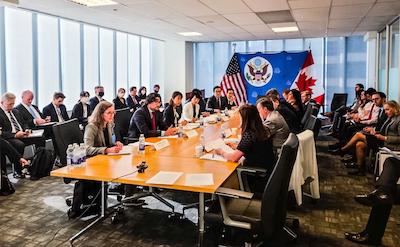
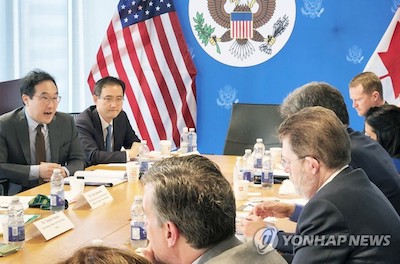
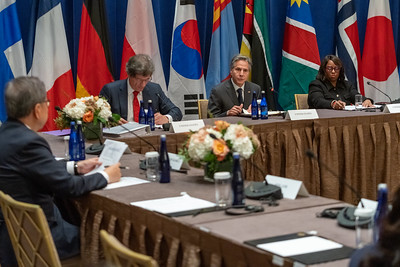
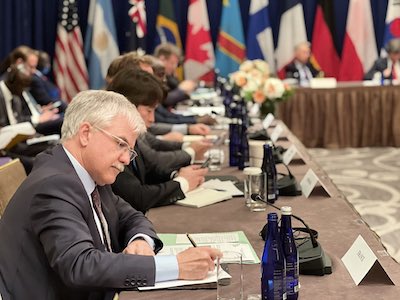
In September 2022, the United States, led by Secretary of State Antony J. Blinken and Export Import Bank of the U.S. (EXIM) Chair and President Reta Jo Lewis, hosted a high-level ministerial event to advance the MSP by convening partners and key minerals-rich countries to discuss priorities, challenges, and opportunities in responsible mining, processing, and recycling of critical minerals. The meeting was held in New York City on the margins of the United Nations General Assembly (UNGA) high-level week.

MSP partners participating in the meeting included:  Australia, Canada, Finland, France, Japan, the Republic of Korea, Norway, Sweden, the United Kingdom, the United States, and the European Union.  Additional minerals-rich countries in attendance included Argentina, Brazil, the Democratic Republic of the Congo, Mongolia, Mozambique, Namibia, Tanzania, and Zambia.

Activities

Convening on the MSP’s ESG Principles in South Africa

In South Africa, on February 7, 2023, the MSP partners agreed on guiding principles for how the MSP will develop projects around the world with local value-add, sustainability, and high environmental, social, and governance (ESG) standards front and center.

Under Secretary Jose W. Fernandez met with MSP partners and minerals-rich countries on the margins of the Mining Indaba conference in South Africa to discuss how the MSP can work with African countries and make sure that critical minerals supply chain growth benefits everyone.

Non-MSP countries in attendance included Angola, Botswana, the Democratic Republic of the Congo, South Africa, Tanzania, Uganda, and Zambia.

Presentation by Argentina’s Secretary of Mining

To advance the goals of the MSP, Under Secretary Jose W. Fernandez convened an online discussion with Argentine Secretary of Mining María Fernanda Ávila, international private sector representatives, and MSP partners to discuss critical minerals opportunities in Argentina. This meeting served to familiarize MSP partners and the private sector with Argentina’s critical minerals sector and projects of potential interest for investment and support. Engagements like this help promote the clean energy transition, further mobilizing resources towards diversifying mineral supply chains and advancing the Biden Administration’s priority of regional collaboration on securing responsible and sustainable minerals.

People in construction reflective vests holding iPad and pointing to screen, and holding mineral rock from mining site

Projects

The MSP aims to ensure minerals are produced, processed, and recycled in a way that helps countries realize the full economic benefits of their resources.  The MSP welcomes the opportunity to work together with resource-rich countries developing their minerals sectors.

The MSP considers projects along the full clean energy value chain, from mining, extraction, and secondary recovery, to processing and refining, and ultimately to recycling.  The MSP embraces the role of innovation and the principles of sustainability and circular economy and strives to support state-of-the-art projects.  The MSP is considering projects around the globe, both within MSP partners’ borders and elsewhere – projects do not have to be located within MSP partners’ jurisdictions to receive MSP support.

The MSP commits to support only those projects that meet high, internationally recognized ESG standards, promote local value addition, and uplift communities, in recognition that all countries can benefit from the global clean energy transition.  Projects supported by the MSP will adhere to rigorous ESG standards throughout the project lifetime.  Further information can be found in the MSP partners’ public statement, “Principles for Responsible Critical Mineral Supply Chains  [165 KB].”

The MSP is assessing more than a dozen minerals projects around the world, across several commodities and stages of the value chain, including processing and recycling projects.  The MSP partner governments may provide financial, diplomatic, or other forms of support.

The MSP is open to receiving information on projects of potential interest to the MSP partner governments.  Information on a project in a given country may be shared with the diplomatic missions of MSP partner governments operating in that country.  Sharing project information with an MSP partner government for consideration by the MSP does not imply or guarantee that the MSP will provide support for the project.

Green blury background and hands holding up cell phone with screen visible, on the screen are the letters: ESG and icons indicating environment, people, and government

Releases

2023

Highlights of Italy’s Participation in the MSP

On July 27, 2023, the White House released a Joint Statement from President Biden and Prime Minister Meloni.

India Announces Participation in the MSP

On June 22, 2023, the White House released a Joint Statement from the United States and India.

MSP Principles for Responsible Critical Mineral Supply Chains

On February 7, 2023, partner countries released a statement of principles for developing critical mineral supply chains that adhere to high environmental, social, and governance standards.

2022

Ministerial to advance the MSP

On September 22, 2022, Secretary of State Antony J. Blinken and Export Import Bank of the U.S. (EXIM) Chair and President Reta Jo Lewis hosted a high-level ministerial event to advance the MSP.

Initial Announcement of the MSP

In June 2022, Under Secretary Jose W. Fernandez and twelve partner countries announced the MSP in Toronto, Canada.

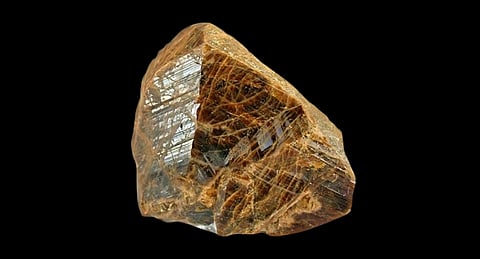
Beautiful mineral rock from underground with blue and gold flecks

In the Media

Center for Strategic and International Studies (CSIS):  “A U.S. Mineral Strategy for Global Energy Transition” 

Under Secretary Jose W. Fernandez provided a keynote address on MSP at CSIS.

2023 SAFE Summit: “A Pathway to Electrification from Minerals to Market” 

Under Secretary Jose W. Fernandez participated in a fireside chat session on the MSP with Ana Swanson from the New York Times.

“CERAWeek 2023” 

Under Secretary Jose W. Fernandez participates in a keynote panel for CERAWeek in Houston, Texas.

“2023 Mining Indaba Conference”  

On February 5, 2023, Under Secretary Fernandez gave a keynote address at the Investing in Africa Mining Indaba — Africa’s largest mining investment conference. He focused on the importance of U.S. support and investment in developing and securing more resilient and sustainable critical mineral supply chains.

India can easily displace China’s position in Rare Earth

Possible exploitation of Rare Earths in India and take India to great heights on technological advancement, manufacturing hub and huge FOREX in-flow.

a) Minerals namely garnet, ilmenite, zircon, rutile, leucoxene, silimanite,
Monazite, etc are the minerals collectively called as heavy mineral or
beach minerals.
b) Monazite which is the only radioactive mineral among these contains
65% Rare earth oxides, 15-20% phosphates, 10-13% Thorium and
0.2 -0.4% Uranium
c) India is home to largest reserves of Monazite and every beach mineral
company is producing these minerals as tailing. These tailings are
either put back in to sea or safeguarded in trenches as per guidelines
of Atomic Mineral department.
d) Only IREL is extracting these rare earth oxides from this mineral but
that is not enough.
e) Rare earth oxides are set of 18 elements (such as cerium,lanthanum,
neodymium, etc) used in various sophisticated applications yet
inevitable applications such as speakers, magnets, motors, solar
panels, etc. With the current trend moving toward electric vehicles, the
demand for rare earth is bound to go up.
f) As of now, entire world is depending on China for rare earth and India
can easily displace China’s position

Steps Reqired:  Ministry of Mines and Department of Atomic energy to
allow private companies to process monazite and come up with a
policy to collect back strategic waste products such as uranium and
thorium.

Competent Authority : Ministry of Mines and Department of
Atomic energy

Expected Forex inflow : 120,000 crores equivalent in US
Dollars and 5% growth each year.

Expected new employment : 500,000 employees

Unexploited Potential of India in the field of Rare Earth Elements

Unexploited Potential of India in the field of Rare Earth Elements – Will  Government implement make in India Programe in Rare Earth Industry?

By Beach Mineral Producers Association

  1. The term “rare earth” is the English translation of French terre rare (terre refers to an oxyde). It arises from the rare earth minerals from which they were first isolated, which were uncommon oxide-type minerals (earths) found in Gadolinite extracted from one mine.
  1. Rare earth elements or rare earth metals are a collection of seventeen elements namely Scandium, Yttrium and lanthanides (15 elements in the periodic table with atomic numbers 57 to 71 namely: Lanthanum (La), Cerium (Ce), Praseodymium (Pr), Neodymium (Nd), Promethium (Pm), Samarium (Sm), Europium (Eu), Gadolinium (Gd), Terbium (Tb), Dysprosium (Dy), Holmium (Ho), Erbium (Er), Thulium (Tm), Ytterbium (Yb) and Lutetium (Lu)).
  2. Of these Rare Earth Elements, our country has been blessed with abundance of the following Rare Earth Elements namely Scandium, Yttrium, Lanthanum, Praseodymium and Neodymium.
  1. The table below contains the Atomic number, Atomic symbol, their name and use of each of these Rare Earth Elements.
Atomic Number (Z) Atomic Symbol Name Selected Usages
21 Sc Scandium Aluminum- scandium alloy
39 Y Yttrium YAG garnet, YBCO high- temperature superconductors
57 La Lanthanum High refractive index glass, flint, hydrogen storage, battery-electrodes, camera lenses.
59 Pr Praseodymium Rare- earth magnets, lasers, green colors in glass and ceramics, flint
60 Nd Neodymium Rare- earth magnets, lasers, violet colors in glass and ceramics, ceramic capacitors.
  1. In India, these Rare Earth Elements occur as part of Monazite. Monazite is found as part of the beach sand minerals present on the southern and eastern coast of India.
  1. India has 27% of Total world reserve of beach minerals, whereas our mining ratio is 0.01% according to the Atomic Energy Department Additional Secretary key note address.
  1. The beach sand minerals are themselves a complex of seven associated minerals namely Garnet, Ilmenite, Sillimanite, Rutile, Leucoxene, Zircon and Monazite all of these are recognized as associated minerals under Rule 69(x) of the Mineral Concession Rules, 1960.
  1. Of these, Ilmenite, Rutile, Leucoxene, Zircon and Monazite are treated as “Atomic Minerals” under Part B of Schedule I of the Minor Minerals (Development and Regulation) Act, 1957. These substances were earlier governed under the provisions of Atomic Energy Act, 1962. Under the said Act, these minerals were also notified as “Prescribed Substances”.
  1. Under the Industrial Policy, 1991, exploitation of these minerals was reserved for Public Sector with only very selective Private Sector participation. The reasoning given by the Government at that time was that there were potential nuclear applications for beach sand, and that in the absence of adequate safeguards and measures, it was necessary to reserve these minerals for the Public Sector.
  1. By 1998, the Government’s thinking had changed. The Government now realized that Titanium was a wonder metal and a source of unlimited export revenue. The Government also realized that Ilmenite, Rutile, and Leucoxene were sources of Titanium, and that they were, as a matter of fact, not radioactive at all. The Government also realized that inherent inefficiencies in PSUs, prevented India from becoming a world player in Titanium, in spite of its staggering Ilmenite reserves. Therefore, the Government notified the 1998 Policy in Beach Sand Minerals, permitting domestic private sector participation in beach sand minerals.
  1. Pursuant to the 1998 policy change, the Department of Atomic Energy commenced issuing licenses for handling Prescribed Substances. Pursuant to this, numerous private sector entrepreneurs entered the field.
  1. As a result, India has emerged as one of the world’s largest players in Titanium Feed stock material.
  1. As the Government began to adopt a more and more scientific approach to the issue, and as the Government’s knowledge and research on the subject increased, it soon realized that Ilmenite, Rutile, Leucoxene and Zircon were not at all fissile in nature and that the policy which described them as “atomic minerals” was poorly researched, retrograde and contrary to national interest.
  1. Thus, on 18.1.2006, the Government issued a notification deleting these four minerals from the list of “prescribed substances”, with effect from 1.1.2007.
  1. Meanwhile, the Government’s knowledge continues to improve. The Atomic Energy (Radiation Protection) Rules have been notified and the Atomic Energy Regulatory Board is rendering yeoman service in a field of radiation safety.
  1. The five REEs we have listed above (Yttrium, Scandium, Lanthanum, Neodymium, and Praseodymium), though found as part of the Monazite mineral, are not fissile and are non- radioactive.
  1. To extract these from the Monazite mineral involves a five step process:
  2. The first step is to mine the monazite that contains the rare earths. Depending on the grade, it could take anywhere from 6 to 86 tonne of ore to produce a single tonne of rare earth mineral.
  1. Next the material goes to a chemical plant for separation. This step, called “cracking,” usually involves using acid or heat. The product that comes out is a rare earth concentrate, containing all REEs mixed together. Cracking can also result in byproducts like Tantalum, Zirconium or Thorium.

iii. Rare earth concentrate must then go to another facility where it is separated into individual rare earths that are refined into oxides. Separation is done by atomic weight, starting with cerium, the most abundant rare earth. To get valuable dysprosium, for example, the less valuable rare earths that come before it on the periodic table must first be separated out. To get terbium, it takes more than 30 days of processing.

  1. Next the rare earths are treated through a process, called beneficiation that produces high-value oxides, metals or magnetic powders. These products are made to the specifications of each manufacturer. An oxide made to the specifications of one customer might not suit another’s needs.
  1. Finally, the rare earths are put into the end product, whether it is a permanent magnet for a wind turbine, or a high-efficiency light bulb.
  2. Thus, extracting these Rare Earth Elements does involve the “cracking” of the Monazite mineral. In the process of cracking, there will be two by-products namely Thorium Oxide (approximately 6%) and Uranium Oxide (approximately 2%) which will have to be handed back to the Government since it is radioactive, and the Rare Earth Oxide which is inert and non-fissile.
  1. REEs are incorporated into many modern technological devices, including superconductors, samarium- cobalt and neodymium-iron-boron high-flux rare- earth magnets, electronic polishers, refining catalysts and hybrid car components (primarily batteries and magnets). Rare earth ions are used as the active ions in luminescent materials used in optoelectronics applications, most notably the Nd: YAG laser. Erbium-doped fiber amplifiers are significant devices in optical-fiber communication systems. Phosphors with rare earth dopants are also widely used in cathode ray tube technology such as television sets. Rare earth oxides are mixed with tungsten to improve its high temperature properties for welding, replacing thorium, which was mildly hazardous to worth with.
  2. The Department of Atomic Energy has issued a publication which shows that following shocking statistics:
Country Reserves of Rare Earth Oxides Annual Production (in tonnes)
Chine 36,000,000 120,000
Brazil 48,000 650
Malaysia 30,000 380
India 1,80,00,000 35

The above shocking statistics is also to be found on the Government website http://www.c-tempo.org.  Countries like Brazil and Malaysia which have a fraction of our reserves are producing many more times than us.  

Now China is monopolizing in this industry. India itself imported more than 40,000 M.Ton of rare earth oxides per year which results approximately 1,52,000 million dollar foreign exchange outgo per year.

Most western economies are looking at India to emerge as a global producer of Rare Earth Elements, so that their dependency on China can be decreased. Unfortunately, the negative approach of the Department of Atomic Energy, stemming for our cold-war, socialist mindset which is preventing Private Sector participation in Rare Earth Elements production.

  1. At present, there are adequate safeguards in the Radiation Protection Rules as well as the Atomic Energy (handling of prescribed substance) Rules to ensure that the cracking is carried out in a safe manner, and the truly fissile by-products are safety handled thereafter. It is needless to mention that Atomic Energy (factories) rules, which are currently applicable to Government Companies can work wonderfully, if extended to private sector also.
  1. Thus, adequate safeguards exist. The Government can also evolve any further conditions as it may see appropriate.
  2. It may be worth mentioning that the present BJP led government had gone to the extent of allowing private enterprises in India in strategic defense production and hence it is more important to allow this sector also for private participation considering the outflow of foreign exchange in importing these products and also the strategic importance of increasing the production of rare earths, thorium and uranium to reduce the dependence of the country on other nations and make “the production and processing of the mineral monazite, a make in India program”.