Beach Mineral Histroy in India – Part-2 – Uses of Beach Minerals

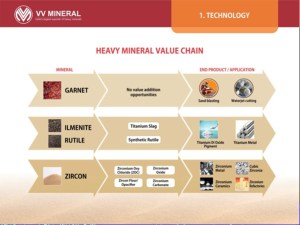
The uses of beach minerals are given below.

Sl.No. Mineral Uses
1. Ilmenite and Leucoxene Manufacture of Titanium di-oxide (pigment for paint)

Welding electrodes

Processing of graded steel

Manufacture of high quality photo grey sun glasses

Manufacture of titanium metal

2. Rutile Ingredient in welding rod flux

Feed stock for titanium di-oxide pigment

Colouring agent in ceramic and glass products

3. Zircon Production of opacifiers, glazes and frits  (for making ceramic tiles)

Floor and decorative tiles

Zirconium chemicals

Zirconium metals for various uses

4. Sillimanite Refractory industry

Foundry

Precision investment casting

Electrical porcelain

Sanitary ware

Abrasives

5. Garnet Sand blasting

Water jet cutting

Water filtration

Abrasive paper and cloths

Micronised garnet for polishing

6. Monazite Extraction of Rare Earths (used in making magnets, glass, LEDs, batteries etc.,)

Beach Mineral Histroy in India – Part-1

Brief Note about Beach Mineral Industries to understand the factual situation of the industry

Garnet, Ilmenite, Rutile, Leucoxene, Zircon, Monazite, Sillimanite, etc., are subsumed under broad category of beach sand minerals or otherwise called placer minerals.  Since these all are available together, Govt., of India notified the same as associated minerals.


Mining of these placer minerals had been under the exclusive monopoly of the foreign companies prior to independence.  After independence the foreign companies disbanded their mining activities.  Taking into the consideration the larger interest of the welfare of the workers and others who were under the employment of the foreign companies, Govt. of India in their wisdom took over the mining activities.   Consequently in 1965, Govt. of India amalgamated all the fragmented companies and formed an unified company called Indian Rare Earths Ltd (Ref page 348 of Kanyakumari District Gazetteer, 1995).  This company IREL had upfront mining leases and factories at Manavalakurichi, Kanyakumari district, another at Chavara and Alappula in kerala State and third one at Chathrapur in Odisha under their control.  In all, there were more than 700 employees of various categories working both at the mines site and at the factory.


IREL mining the beach minerals and after processing they sold within and outside India. Out of the seven minerals, monazite percentage is high in the above 3 places, hence they build the factory there. In monazite, more than 70% are rare earth elements.  A small portion of Uranium less than 0.1% to 0.3% and Thorium 7% to 9%.  Since Uranium and Thorium has radiation, this monazite is a radioactive mineral. The reason for the exclusive right being given to Indian Rare Earths Limited for handling these radioactive substances is borne out of the fact that these Uranium and Thorium have “radiation effects” causing health hazards to the workers.


M/s.IREL has not shown much interest in  other areas in view of the fact that the content of the radioactive substance is relatively insignificant and almost Nil.  Since there was not much demand for Garnet , Sillimanite, etc., minerals at those times , M/s.IREL did not have keen interest in searching for those beach minerals.

-To be Cont..-

Policy for Exploration of Critical Minerals in New Projects and Recovery of Critical Minerals from Overburden, Dumps and Tailings of Existing Mines, 2025

The Policy of Government of India Regarding Critical Mineral is posted for our Members information.

Policy for Exploration of Critical Minerals in New Projects and Recovery of Critical Minerals from Overburden, Dumps and Tailings of Existing Mines, 2025_16 January, 2025_

Timely need action.

Last 20 years we made the same request, but Government did not consider. Now due to the China threat on Rare Earths supply, now Government is in a compulsion to re-open the same.

Though part of the action is to help a big North India private company, this is a good move for our nation. Media news for members and general public information.

********

Why India’s vast monazite resources should be opened to private-sector mining

Monazite is currently a prescribed material under India’s Atomic Energy Act, 1962. This designation restricts it to the monopoly of Indian Rare Earth Limited (IREL).
Monazite is present in India's beach sands.
Monazite is present in India’s beach sands.

The Union Budget speech has proposed to support the mineral-rich states of Odisha, Kerala, Andhra Pradesh and Tamil Nadu to establish rare earth corridors and promote mining, processing, research and manufacturing. Prior to this, the Indian government seemed to be signalling a willingness to engage private players in exploring India’s vast beach sands and monazite resources. If implemented, this is a welcome step for India’s critical mineral security, as it unlocks the potential of monazite’s constituent light rare-earth oxides (REO) for private-sector investment.

Monazite, present in India’s beach sands, is currently a prescribed material under India’s Atomic Energy Act, 1962, because of its around 10% thorium and trace uranium content. This designation restricts it to the monopoly of Indian Rare Earth Limited (IREL).

However, limiting private participation to just the exploration process, leaving mining untouched, is unlikely to spur any meaningful activity. Exploration is typically incentivised by the preferential right to mine. Without that, the upfront capital risk required and the long exploration timelines contingent upon which exploration firms earn their revenues, are sure to deter prospects.

Additionally, junior explorers — smaller firms with niche technological capabilities — in other jurisdictions are allowed to sell their discoveries to larger operators at competitive market rates. This is a less lucrative option when there exist state mining monopolies.

Hence, for reform to truly take shape, India must pair exploration liberalisation with a regulatory overhaul that treats monazite as a dual-use ore and allows beach sand mineral (BSM) mining by private players under a tightly enforced licensing regime.

The numbers speak for themselves. India’s beach and inland placer deposits of monazite across eight states are capable of yielding 7.23 Mt (million tonnes) of REO (Rare Earth Oxides) dwarfing the 1.29 Mt in-situ REO in the hard rock deposits of Gujarat and Rajasthan. At higher REO concentrations of 55-60%, monazite offers an enormous grade advantage over alternative ores.

Additionally, beach sand is a mechanically concentrated ore wherein wave currents wash away light quartz sand, leaving behind heavy minerals ripe for extraction. This makes mining of beach-based monazite an extremely cost-effective process involving dredging and simple gravity/magnetic separation, as compared to conventional drilling, blasting, and chemical processing in land-based ores, which require higher power.

Evidently, it is the thorium content and, consequently, monazite’s radioactive nature that stand in the way. India holds around 25% of the world’s thorium reserves and has only low-grade, small uranium reserves, making thorium key to India’s nuclear programme. Still, these are experimental and not commercial-grade projects. With no spot market and much thorium tied up in R&D or strategic stockpiles, its national security halo must not block PPP models that ensure government access to thorium while the private sector leads beach sand mining.

Monazite’s radioactivity categorises it as a naturally occurring radioactive material (NORM) by the International Atomic Energy Agency, in that it is treated as a regulated substance, not industrial-grade material. Hence, by international standards, it is also not subject to the high controls applicable to nuclear fuel. Proven and mature physical safeguards during its mining, separation, transportation, and storage would effectively mitigate its radioactivity risk.

None of this is news for India, and in fact, critics of allowing BSM to be mined by private players reference the period between 1998 and 2019, when this was allowed.

In 1998, private BSM mining was allowed under a licensing regime (except monazite) to maximize domestic/foreign participation. In 2016, following the 2015 amendment to the Mines and Minerals Development and Regulation Act, the Atomic Mineral Concession Rules (AMCR) brought all BSMs onto the atomic minerals list. A threshold of 0.75% monazite was introduced, with only government-controlled firms allowed to work in the BSM deposits above that level. This was reversed in 2019, when the AMCR was amended to set a 0.00% threshold, effectively barring private-sector mining of any beach sand deposit containing monazite of any grade.

This reversal was triggered by illegal mining in several pockets of the country, particularly Tamil Nadu. This included mining without valid clearances and beyond permitted sites, or in violation of coastal zone related compliance – an important concern given these are ecologically fragile ecosystems. However, the bigger issue was the leakage of monazite which arose from a fundamental flaw in the policy.

Miners had to store separated monazite in DAE-approved concrete-lined pits, submit quarterly accounts and allow inspections. Since monazite was banned for commercial activity, including to the state, and was still valuable for its thorium and REO content, a black market for it emerged, with some exported illegally, misdeclared as zircon or ilmenite, or just stockpiled in private godowns without safeguards. This sparked national security concerns, and instead of tightening regulations or considering policy changes, the government chose a blanket ban on private sector involvement.

One way this could be solved is by the IREL rolling out an offtake policy for monazite at a price floor above its market price. Post-cracking monazite and separating thorium, the processing of the residual REO could involve licensed private players, including foreign companies from Japan and South Korea, partnerships that IREL is currently exploring. This guaranteed procurement policy for monazite could potentially incentivise its compliant storage while allowing commercial activity and value addition in other BSMs to take off. This would also help IREL with the feedstock required to expand REO production.

This model, in which IREL continues to be embedded in the monazite value chain while being supported with market incentives, will help curb the mineral’s leakage. This bodes well for the radioactive concerns associated with these substances as well. The capex costs required for monazite processing, thorium handling, and radioactive waste management, along with the economies of scale and environmental scrutiny therein, may still work best under government control. The costs incurred in the monazite procurement should not be seen as a liability, but an asset which can help India gain foreign policy leverage by becoming a key node in the global mineral supply chain to counter Chinese dominance.

India must explore such models within a tight licensing regime to combat the rampant cronyism and corruption seen in the pre-2019 era. A phased approach of transitioning away from the complete ban on private sector activity should be adopted, starting with pilot zones with strict oversight, short-term permits, and clear exit clauses, considering existing concerns. These deliberations are essential to the Indian national interest. The current ban may be convenient, but it is a blunt instrument that stifles progress, throwing the metaphorical baby along with the bathtub.

Source : https://www.newindianexpress.com/nation/2026/Feb/04/why-indias-vast-monazite-resources-should-be-opened-to-private-sector-mining


“MAKE IN INDIA” Scheme not implemented in selective industries – Amounts China become monopoly.

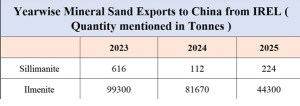
Indian Titanium and other value added producers could not able to get the raw material Ilmenite from IREL. So Indian Titanium Producers are suffering for raw material. But IREL export Ilmenite to our competitor China at a lessor price. By purchasing Indian Ilmenite at the Government company IREL at a cheaper rate,  China producing Titanium and compete with Indian Titanium producers. Though Indian Government sologan is  “MAKE IN INDIA” they did not full fill the raw material either complete supply from IREL or by opening Ilmenite mining to private parties. The export figure details by IREL to China is given below.


FIMI Request Ministry of Mines to takeup the issue with DAE to ensure adequate supply of Ilmenite to Indian TiO2 producers

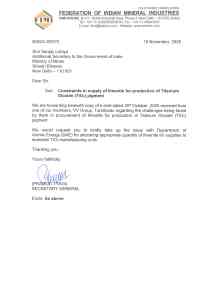
Now the only Ilmenite Producer in India is IREL Government Company. But they are not ready to supply the required quantity of Ilmenite to the Indian Titanium Producers. When the matter was taken up to FIMI, the Secretary General wrote letter to Additional Secretary, Ministry of Mines to take up the issue with DAE to ensure adequate supply of Ilmenite to Indian TiO2 producers.

“Make in India”  Scheme not supported by Government Agencies. The problem faced by Indian Titanium Producers is explained our e-mail dated 30.10.2025 send to FIMI and FIMI’s Secretary General letter to Ministry of Mines is given below.

Introduction

Our associate company V.V. Titanium Pigments Private Limited, are one of India’s established manufacturers of Titanium Dioxide (TiO₂) pigment, serving both domestic and international markets. Our TiO₂ products are used as key raw materials in paint, plastic, rubber, and paper industries.

Our manufacturing facility is located in Thoothukudi, Tamil Nadu, and we are an ISO 9001, ISO 14001, and ISO 45001 certified company, in continuous operation for over 30 years.

Importance of Ilmenite and Its Applications

Ilmenite (FeTiO₃) is the principal raw material used in the production of Titanium Dioxide pigment, an inert, bright white compound known for its opacity, brightness, and UV resistance. TiO₂ is an indispensable ingredient in:

* Paints and coatings

* Plastics and rubber

* Paper and textiles

* Sunscreens and cosmetics

Global Occurrence of Ilmenite

India  (Kerala, TamilNadu, Odisha, Andhra Pradesh)

Australia , South Africa , Norway, Canada, China, Mozambique, Ukraine, Brazil, USA, Srilanka

Collectively, these countries constitute the majority of global Ilmenite and titanium mineral supply.

Present Situation in India

VV Titanium Pvt Ltd has historically procured Ilmenite from both public sector and private sector suppliers within India including from our own mine up to 2013. However, following the Government of India’s policy changes and restrictions on private beach sand mining operations, all private producers have ceased operations.  Consequently, M/s. IREL (India) Limited has remained the sole domestic supplier.

While we appreciate IREL’s efforts in maintaining production, the company’s focus on exports has significantly constrained the availability of Ilmenite for domestic TiO₂ manufacturers like us. Despite continuous follow-up, we are being allotted material primarily from IREL’s Odisha unit, rather than from their Tamil Nadu (Manavalakurichi) unit, which is geographically closer to our plant and offers substantial logistical advantages.

Additionally, the pricing policy of IREL is not conducive to local value addition. The domestic price can be fixed taking into consideration of the freight cost from Odisha (approximately 1,700 km away from our Plant) as it escalates our input costs significantly and impacting our competitiveness.

Critical Mineral Reference

As per the Mines and Minerals (Development and Regulation) Act (MMDR Act), Ilmenite is classified as a Critical and Strategic Mineral (Sl. No. 21, Part D of the First Schedule).

Ilmenite is the raw material for producing TiO2 Pigments.

Ilmenite Demand and Projections


Year                                     Requirement (in MT) for our factory

2024–25 / 2025–26               4,000 – 5,000 MT per Month

By 2030                                      8,000 – 10,000 MT per Month

Supply Sources and Import Dependence

From 2011 to 2013, our unit procured Ilmenite from our own mining leases and other public and private suppliers within Tamil Nadu. Post the 2013 after stoppage of private mining in Tamilnadu, domestic availability sharply declined, forcing us to import Ilmenite ore at significantly higher cost, rendering operations economically unviable.

We thereafter approached M/s. IREL (India) Ltd to ensure consistent domestic supply. As their Manavalakurichi (Tamil Nadu) unit was temporarily non-operational, we were registered with the Indian Bureau of Mines (IBM) and obtained a Trading License in Odisha to procure Ilmenite from IREL’s Odisha facility.

Although the Manavalakurichi unit has since resumed operations, its Ilmenite quality does not meet our production requirements, and the cost structure remains similar to Odisha’s supply (excluding freight advantage).

Currently,  supply from IREL (Odisha) does not meet full demand, compelling us to resort to limited imports at high prices — an unsustainable situation for long-term operations.

  1. a)   Difficulties in Import of Ilmenite:


  1. Substantial Capital Investment Requirement

The import of Ilmenite in bulk quantities (approximately 10,000 MT) necessitates a significant capital outlay. The costs associated with ocean freight, port handling, customs clearance, and bulk cargo management collectively result in a high initial investment burden.

  1. Regulatory and Licensing Challenges

The import process involves multiple regulatory approvals, licensing requirements, and compliance with import policies. These formalities can significantly delay the receipt of material, thereby affecting the continuity of production.

  1. Risk of Material Loss During Port Handling and Storage

Due to the absence of dedicated covered storage facilities for Ilmenite at the port, the material remains exposed to environmental factors such as rainfall, humidity, and wind. This increases the likelihood of material loss, contamination, or quality degradation during interim storage and handling.

  1. Increased Logistical and Transportation Expenses

Additional costs are incurred for the inland transportation of Ilmenite from the port to the manufacturing facility. These expenses, along with port handling and demurrage charges (if any), contribute to a higher landed cost of the material.

Request for Government Support

Given the circumstances, we earnestly request the Government’s intervention to:

  1. Allot sufficient quantity of Ilmenite to domestic TiO₂ manufacturing units at reasonable and/or concessional price and may offer discounts according to the distance from the IREL’s facility and the end users’ facility.
  2. Give first priority in Ilmenite allocation to Indian value added industries over export obligations, aligning with the “Make in India” initiative and the Government’s objective of mineral security.
  3. Otherwise, considering to permit our own mining lease which has valid environmental clearance and all other statutory approvals,  under strict environmental and regulatory conditions, thereby ensuring sustainable supply while protecting ecological interests.
  4. Rationalize IREL’s pricing and distribution policy to support value-added domestic industries.  A “Special Discounts” can be considered for the supply of Ilmenite to the customers who has to incur higher freight charges due to long distance (like ours – around 1700 KM away from the Odisha facility) in transportation from the IREL’s facility.

By implementing these measures, domestic TiO₂ manufacturers can:


  1. a)   Supply quality TiO₂ competitively to both Indian and global markets.


  1. b)   Reduce TiO₂ imports, conserving significant foreign exchange.


  1. c)   Generate employment in mining, processing, and downstream sectors.


  1. d)   Strengthen India’s position as a self-reliant producer of critical minerals.

Conclusion

Ilmenite is the backbone of India’s Titanium Dioxide industry and a key component of the nation’s critical mineral ecosystem. To sustain and enhance domestic value addition, it is essential that Indian TiO₂ manufacturers are ensured priority access to Ilmenite at fair, stable, and locally competitive prices.

We sincerely request the concerned authorities to kindly consider our grievance and take favourable action to ensure the sustainable operation of domestic TiO₂ pigment units, thereby contributing to India’s industrial growth, export competitiveness, and mineral security.

Thanking you,

Yours faithfully,

VAIKUNDARAJAN

VV Group

Note : Our above said mail was forwarded by FIMI to take up the issue with Department of Atomic Energy. If Government agencies also support, then only “MAKE IN INDIA” scheme will become success.
 

Does all this done with the approval of the Hon’ble Prime Minister

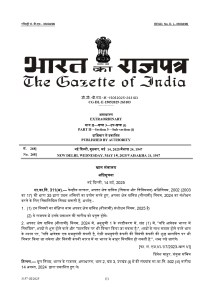
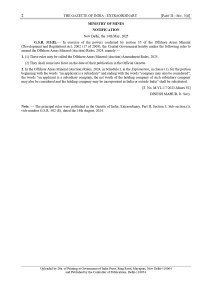
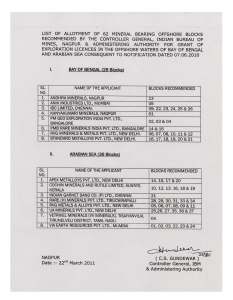
All the licences granted in our country  oceans under offshore mining area Rules to private Indian companies were cancelled stating that, the licenses will be considered only for government company. Accordingly four licenses granted to Tamilnadu companies also were cancelled stating that, the license will be granted only for government companies.  Does Government granted license to any Government Company? No. But they are planning to grant the license to foreign private companies through their subsidiary company registered in India.  This means our Indian Mineral wealth was prevented to our Indian companies and given to overseas companies. Does all this done with the approval of the Honourable Prime Minister? Why the Hon’ble Chief Minister of Tamilnadu not open his mouth for cancelling four Tamilnadu Companies licenses is a million dollar question. The amendment made in the rules admitting foreign companies subsidiary is given below.


India is not supporting golden egg lays hens (Mineral Industries).

Government of India, Ministry of Mines and Federation of Indian Placer Mineral Industries published a “Report on State Best Practices in Mining” January 2025.

On going through the above said publication, there are some serious issues with respect to Tamilnadu State. All knows that, except food, cloth and wood products everything is only by way of mining. In the book the following is mentioned.

  • Statewise mining contribution to the GDP, our neighbour states Andhra 2.43%, Telangana 1.93%, Karnataka 0.97%, but Tamilnadu 0.27%. Though Tamilnadu has huge reserve of valuable minerals our contribution to the GDP is very very less as per the above said record.
  • The Mining Exploration budget by countries also India is last place of 206 Million USD, whereas Argentina 427, Peru 586, Mexico 607, Cilie 832, US 1820, Canada 2440 and Australia 2760. So exploration wise India is very poor.
  • Average approval time for mining rights also India is the last place, whereas Colombia within 1 month, Botswana and South Australia below 2 months, Brazil 2 months, Cilie, 7 Months, Russia 12 Months, South Africa above 12 months, whereas average 26 to 36 months, that means 2 to 3 years. More over 90% applications take over 5 years.
  • With respect to effective tax rate, India is the highest tax rate approximately 50% including DMF, Royalty and other taxes. Whereas Indonesia (west bapuva) 46%, Namebia 45%, South Africa, Australia, Canada 40% and Indonesia (Sulawesi), Chili 38%, Canada (Quebec) 34% and Mangolia 31%.

The above said report will establish that, how India destroy the mineral industry which is a golden egg laying hen, not only 50% tax, but also highest employment generating industry.  The relevant pages is extracted below.


MAKE IN INDIA , EASE OF DOING BUSINESS will not applicable against Chinese products.

Titanium is produced from Ilmenite, one of the beach mineral.  Our India has 7000 kms beach. Atomic Minerals Directorate (AMD) studied 2000 kms beach alone up to 2023.  Out of 2000 kms, only 1000 kms alone detailed study carried out by AMD. This 1000 kms study establishes that, our India has 1/3rd of the total world reserve of Ilmenite (Kindly ref: https://beachmineral.com/india-has-1-3rd-of-the-total-world-reserve-dae-joint-secretary-minutes/)

Ilmenite is the raw material for production of Titanium.   Some of the Indian Ilmenite producers who are having valid mining lease established their own Titanium factory. So the Chinese government and Chinese producers could able to make false propaganda against Indian Ilmenite producers and got orders from Govt., of India to stop the Ilmenite production by private parties. So the Indian Titanium producers could not able to procure the raw material within India. They have to import Ilmenite at a higher price from other countries whereas, IREL exported the Indian Ilmenite at a lessor price to China, when not ready to supply the required quantity to the Indian Value Added Titanium producers. Thus our Government Company also helping to kill Indian Titanium Producers.

Titanium Production comparison details in percentagewise between 2004 and 2024 is given below.


Country 2004 2024
North America 33% 16%
Western Europe 28% 10%
Middle East & Africa 3% 2%
Central & South America 4% 4%
Central Europe 5% 3%
Japan 5% 2%
Other Asia Pacific 10% 3%
India 1% 1%
China 12% 58%

Source : TZMI

We can find out that, China has dominated in the Titanium Product. Though India has 1/3rd of the world reserve of Ilmenite, India could not able to increase the production of Titanium due to the unwanted controls and uncontrollable imports from China.

Only few companies in India is producing Titanium. The Indian Titanium producers appealed to Central Government to exercise its powers under Monopoly Restriction Trade Practice Act and impose duties for Chinese Titanium. Though Kerala Government owned Travancore Titanium requested the Central Government to impose anti-dumbing duty against Chinese Titanium import, the Central Government has not take any action to impose the duty. The Net Result our Indian owned raw material Ilmenite is exported to China by IREL at a lessor price and the finished product Titanium is imported in very higher price. The MAKE IN INDIA , EASE OF DOING BUSINESS nothing work out against Chinese.

India’s ambitious lithium dreams have stalled

India’s ambitious lithium dreams have stalled

Last year, India touted the discovery of a huge reserve of valuable lithium in Kashmir. Experts say optimism around the discovery was overblown.

  • In 2023, the Indian government announced a lithium reserve of 5.9 million metric tons in Kashmir.
  • The government has since failed to find bidders for the reserve, and extraction plans have been halted.
  • Industry experts say the government’s reports around the reserve were misleading and inadequate.

Sunil Thakur, a 24-year-old engineering graduate, once planned to build a career as a civil engineer. But jobs were scarce, and so Thakur spent his days frying samosas for his family’s snack shop in Salal — a picturesque mountain village of about 10,000 people in India’s northern state of Jammu and Kashmir.

Then, in February 2023, Thakur’s dreams of prosperity were suddenly revived.

India’s mining ministry informed the villagers that they were sitting on a fortune: 5.9 million metric tons of lithium, a silver-white metal that is a core component of the batteries necessary for India’s transition to clean energy.

The discovery — a first in India — would make the country the holder of the fifth-largest lithium reserve in the world, mining officials announced. Indian media outlets jubilantly reported that companies including Mitsubishi, Tesla, and Ola Electric were eyeing the reserve.

Thakur and his family started daydreaming about selling their land in exchange for “a duplex home in a big Indian city, and loads of cash,” he said. He imagined investing in the family business, first established by his grandfather nearly four decades ago.

Two years later, nothing has happened. The government tried to auction the lithium block twice in March, and failed both times, due to a lack of bidders. The extraction plans have been halted indefinitely.

There were several red flags surrounding the auction, according to PV Rao, a senior geologist in the mineral industry who represents India at the Committee for Mineral Reserves International Reporting Standards, a forum that sets standards for exploration results.

For one, the amount of lithium in the Salal reserve is much less significant than initially reported, Rao and other industry experts told Rest of World. They said that only about 0.02 million tonnes of lithium carbonate is present in the ore body, a small fraction of the levels seen in other major reserves. Secondly, the reserve holds minerals in clay-deposit form, which is difficult to mine commercially.

According to Rao, the geological report commissioned by the government didn’t contain enough information about the reserve to meet international standards. “That report is [a] very, very skeleton type of report with limited information, based on which the bids are being made,” he said, adding that genealogical reports produced by the Indian government often contain “misleading and quite inadequate” information.

“It was irresponsible of the government to act that way. It is nothing but actually hiding the facts,” Rao said. “Are you trying to sell it and put the investors into doom?”

“It was irresponsible of the government to act that way.”

According to Saurabh Priyadarshi, a former chief geologist at Geoxplorers Consulting Services with 30 years of experience advising conglomerates in the mining and metal business, “the auctions will fail every time if offered in its unexplored form” due to “inadequate information.”

Shafiq Ahmed, who was a district mineral officer at Reasi in Jammu when the Ministry of Mines announced the reserve, told Rest of World that a handful of private companies tested the samples independently and “were not satisfied” with the quantity and quality of the lithium. “That’s why the companies are walking back on it,” he said.

“It is neither feasible nor financially viable,” Ahmed said. “The government announced it in haste.”

Lithium was first discovered in Salal by accident when a team of geologists visited the region in the 1990s looking for bauxite, a source of aluminum. Decades later, in 2018, as lithium became important in the global transition to clean energy, Indian mining officials returned to the area for exploration.

Even if the reserve were truly stocked with “white gold,” as lithium is now sometimes called, mining in Salal village is fraught with challenges. For companies looking to invest in minerals, Jammu and Kashmir is a region full of uncertainties, Puneet Gupta, an electric mobility expert and director at rating agency S&P, told Rest of World. “The state suffers from political instability, violence, and lack of peace — any company coming in will see all those things in the picture,” he said.

Salal is located in the disputed and conflict-hit Kashmir region, near India’s border with Pakistan. In the past two years, militant attacks have intensified in the areas surrounding Salal. A local militant group announced it would attack any company that mined the lithium reserve, calling mining “the colonial exploitation and theft of resources of Jammu and Kashmir.”

The village is situated on the Chenab River, part of a water-sharing treaty between India and Pakistan. Lithium mining is a resource-intensive process that heavily pollutes water and soil, affecting local residents, agriculture, and biodiversity. The region is also highly seismically active. “These factors make any industrial intervention in the area a complex and delicate undertaking,” Priyadarshi said.

Before putting the reserve up for auction again, the government will consider further exploration. Mining officials say that may take months or years. Thakur, the snack shop worker in Salal, is furious about the delay. He said he feels like his future is caught up in the uncertainty. He was planning to renovate the shop, but is now hesitant to invest in infrastructure that might be “bulldozed the next day,” he said. “We have been standing on the gallows — I feel like the lever can be pulled any day.”

Karan Singh, Thakur’s 65-year-old uncle, lives with his mother in a well-furnished three-room house that sits over the mineral deposits. Before the discovery was announced, Singh had never heard of lithium. He said he spent many nights afterward dreaming of the family’s reversed fortunes.

Now, however, he welcomes the delay. He remembers growing up with clean air and water, amid “the natural beauty of my village,” he told Rest of World. Moving home at his age would be a difficult task, Singh said, and he is content for the lithium to remain in the ground so that he can stay.

Thanks to : https://restofworld.org/2024/india-lithium-reserves-halted/?utm_source=pocket-newtab-en-intl