India’s beach sand-mining industry set to prosper under private sector

India’s beach sand-mining industry set to prosper under private sector

Jaideep Prabhu Jul 14, 2016 15:16 IST

Beach-sand-deposit

With the strangulation of rare earth supplies by China, India’s beach sand-mining industry has received a fillip to develop and expand.

However, there are several hurdles: Government regulations aside, beach sand mining is a much misunderstood industry that has caused concern in the past. For example, the image of mining in the public mind involves massive trucks carrying off earth and large depressions in the ground caused by excavations. This is believed to damage not only the environment, but also the beauty of southern India’s beaches. Beach sand-mining is quite different in many respects, and it is an important industry whose development is vital not just for India’s economic health but also strategic interests.

One of the misconceptions about beach sand-mining is the assumption that it involves quarrying. This is patently false: Companies that operate in this field in southern Tamil Nadu, for instance, dredge only the top inch of beach sand. Any deeper, and they would be mining for silica, which is neither a rare earth mineral, nor of any use to the industry. The skimming is done every morning, usually between 4 pm and 12 pm; each day, the sea deposits fresh layers of rare earth minerals on the beaches and by evening, much of it is washed away if not harvested.

The source of these minerals, however, are the Ghats – these minerals are found in the rocks in quantities too small to extract profitably, but natural weathering erodes the deposits which make their way into streams and rivers and to the ocean. The breaking wave deposits the heavier minerals further up the beach but the back wave carries the lighter minerals ashore and deposits them closer to the water.

This partial sorting of minerals based on their weight explains the striations of colour that can be seen on the beach.

Of the superficial inch, somewhere between 70 and 80 percent of the sand collected is returned to the beach after a primary filtration process. Rare earths, as their name suggests, exist in very small quantities in the sand and most of the day’s collection is gangue material. This filtration is usually done very close to the mining area so that the volume of material transported to the factories is less. The collection is sifted through a trommel screen and then put through a concentrator unit that uses the principle of gravity to separate the heavy minerals from the sand.

Karan

Although there are several minerals that yield rare earth elements, the beaches of Odisha, Andhra Pradesh, Tamil Nadu and Kerala are more abundant in seven – garnet, ilmenite, leucoxene, monazite, rutile, sillimanite, and zircon. These ores, when processed, yield niobium, tantalum, titanium, thorium, and other elements important for a wide variety of industries such as electronics, energy, plastics, paints, construction, shipping, paper, and nuclear. China dominates the rare earths market with 97 percent of the exports but even at a meagre two percent, India is the second largest exporter of rare earths. With Beijing’s recent restrictions on rare earths exports, prices have increased and several countries such as Japan, France, and the United States are interested in the development of Indian rare earth deposits.

At the factory, the rare earth minerals are extracted using various techniques based on their physical properties. The raw material is sorted using only magnetism, conductivity, and gravity to separate the six or seven minerals. High tension and magnetic separators extract ilmenite, monazite, rutile, and garnet while zircon and sillimanite are separated by their specific gravity in spiral concentrators and wet tables. At no point are any chemicals used in the separation of these minerals though other ores occurring elsewhere may require it, such as separating sillimanite from quartz. The extracted minerals may be further processed based on quality; for example, electrostatic plate separators, air tables, cross-belt magnetic separators, very high intensity magnetic separators, and rare earth drum separators can refine the minerals using the same principles that were used to extract them.

Beach-sand-mining-process

The entire process can be made to have a low impact on the environment.

For example, VV Mineral, a Thoothukudi-based firm, uses the natural Tamil Nadu sun to dry the minerals rather than use large, diesel-powered kilns. Furthermore, the water used in the separation process is treated and recycled. What few tailings are generated are dumped into a small pond of recycled water where the sand bed will act as a natural filter. VV Mineral, India’s largest garnet and ilmenite exporter, has also won several awards and certifications for its environmentally friendly mining processes. Furthermore, its corporate social responsibility involves employment of local youth, health coverage, education, and several other services to the area.

Admittedly, processing rare earths to obtain their elements is a chemical process. However, this is different from beach sand mining and only few of the firms, usually public sector undertakings, involved in one engage with the other.

The government is now considering further opening up the mining of rare earth minerals to the private sector.

This is to reduce dependence on foreign imports necessitated by the abysmal failure of PSUs to develop and expand domestic mines and processing plants. The expansion of private sector presence from lighter rare earths to heavier rare earths is one of several important steps India must take towards achieving capabilities across the entire chain of products. With good geological data, existing firms may wish to expand their portfolios or new players may be interested in entering the market.

A market-oriented policy would have a strategic international impact in that purchasers will have an alternative vendor to China. Given the importance of some of these materials to sensitive fields, India’s value as a partner will increase and allow the Delhi to leverage its ores for important technology and other benefits. Rather than cast accusing glances at the beach sand mining industry, it must be incorporated into the ‘Make in India’ national strategy for self-reliance.

Link : http://m.firstpost.com/business/indias-beach-sand-mining-industry-set-to-prosper-under-private-sector-2893298.html


Shri. Balvinder Kumar, IAS, Secretary, Ministry of Mines message in National Conclave on Mines and Minerals at Raipur

The Mining Sector has a pivotal role to play in the “Make in India” Vision of the Prime Minister. With the rapid growth of the Indian Economy anticipated in the years to come, there is a renewed thrust in infrastructure and manufacturing sectors, which would require ensured and timely supply of minerals as basic raw materials. The reforms undertaken would ensure that the matching growth of the mining sector is sustainably achieved for giving impetus to the “Make in India” Program.

Article About Beach Mineral Policy published in TOI

For Policy Coherence on Beach Sand Mining

It is most unfortunate that myopic policy and dated rules keep the beach sand minerals (BSM) sector hugely constrained and functioning well below potential despite their high and rising strategic and commercial importance. BSM are a group of deposits, namely ilmenite, rutile, zircon, monazite, leucoxene, garnet and sillimanite, found across beaches in peninsular India. But they all continue to be misclassified as “atomic minerals“ in the law, with the result that routine approvals take 7-8 years, with the green signal required from as many as 28 departments both at the Centre and states.Some 65-70% of BSM constitute ilmenite, which yields strong-metal titanium used to make paint and tough metal alloys.

India has about 30% of global reserves of BSM, but the production-to-reserve ratio here has been the lowest in the world at 0.002; the sector was opened up to private sector participation as late as 1998. What is worse, in a back to the future move, the Atomic Minerals Concession Rules, 2016, propose to abruptly restrict BSM mining only for the public sector if the deposits have equal or more than 0.75% monazite. This is draconian and worse.

Thankfully , since 2007, ilmenite, rutile, zircon and leucoxene are no longer officially classified as atomic minerals. Yet, the Mines and Minerals (Development and Regulation) Amendment Act, 2015, has not incorporated the change. This needs to be done pronto. We clearly need proactive regulation and oversight of BSM. There is no reason why , say, the output of ilmenite here remain in the low single digits of global production. A business-like policy framework can result in billions of dollars in output and value-added and give rise to huge employment. Besides, BSM do not require conventional mining, blasting or trenches, etc, as the sand is duly restored.

ET

Mines Ministry to discuss threshold value on heavy minerals

“Mines Ministry will take up the issue of TLV on beach sand minerals (BSM) with the industry over the demand that it has made on the provisions of the draft Atomic Mineral Concession Rules 2016 at the national mines and minerals conclave in Raipur tomorrow,” a senior government official said.

Mines Ministry will today take up the issue of threshold limit value (TLV) on beach sand minerals or heavy minerals, which the mining industry says can adversely impact the companies if implemented. “Mines Ministry will take up the issue of TLV on beach sand minerals (BSM) with the industry over the demand that it has made on the provisions of the draft Atomic Mineral Concession Rules 2016 at the national mines and minerals conclave in Raipur tomorrow,” a senior government official said.

The draft rules proposes to reserve all BSM deposits containing more than 0.75 percent monazite in the THM (Total Heavy Minerals) for government-owned corporations. Even for already operating mines, if it is found that the monazite content is above the fixed TLV, the lease will be terminated.

An official with a private miner said: “This provision will reserve almost more than 75 percent of the explored reserves to government sector, which will have a huge adverse impact on the BSM industry and the BSM mining situation will go back by twenty years, reverting the production to reserve ratio to 0.001 percent prevalent in the 1990s.”

The industry is demanding that the TLV may be fixed as 5 percent in THM or 2 percent in the deposit and the termination clause be totally removed. If required, suitable safeguards may be implemented by Department of Atomic Energy (DAE), like having a conservation policy for monazite.

Beach sand mining generally includes ilmenite, rutile, zircon, garnet, monazite, leucoxene and sillimanite.

Most of these minerals occur together but their individual contents varying from deposit to deposit, with the major mineral in most deposits being ilmenite.

The government has earlier said that five states — Andhra Pradesh, Odisha, Maharashtra, Kerala and Tamil Nadu — have heavy minerals worth Rs 65,000 crore which are available on the coastline and can be extracted provided the industry complies with the norms including those relating to the Coastal Regulatory Zones (CRZ).

BSM industry is also demanding a separate policy for monazite production and processing to utilise the rare earths available in monazite, so that India can be a major player in the field of rare earths, the company official said.

Monazite, a mineral of Thorium and Rare Earth Element (REE), is the only commercial source of Rare Earths in the country at present. Private sector is not allowed to mine monazite.

Presently, Atomic Minerals Directorate for Exploration and Research (AMDER), part of the DAE, carries out exploration, establishment and development of atomic minerals in the country, including Monazite.

Indian Rare Earths, a PSU controlled by DAE, processes Monazite at its Rare Earths Division in Kerala. IREL has been processing Monazite to produce Rare Earths compounds, but in 2004 this was stopped due to lack of market, as materials became available at a much lower cost.

Read more at: http://www.moneycontrol.com/news/economy/mines-ministry-to-discuss-threshold-valueheavy-minerals_6972861.html?utm_source=ref_article

http://www.business-standard.com/article/pti-stories/mines-ministry-to-discuss-threshold-value-on-heavy-minerals-116070300302_1.html

http://indiatoday.intoday.in/story/mines-ministry-to-discuss-threshold-value-on-heavy-minerals/1/706609.html

Financial express


AMD Clarify the MTC System

Atomic Energy Department and AMD dispensed the Monazite Test Certificate from 2007 itself and introduced voluntary MTC procedure. Since there is no clarity the members could not able to get the MTC from the competent authorities. Hence a letter was send to the Director, AMD, Thiruvananthapuram seeking the Clarification. The Officer In Charge Shri.K.Balachandran immediately take action on our representation and send the new form prescribed for obtaining MTC along with his letter No. AMD/BSOI-T/2016/583 dated 27.6.2016. Our greeting to the sincere officer for giving early reply. The letter with format is attached for future use of our members.

AMD Trivandrum lr clarify MTC System


Copy of mail send to National Security Adviser to take action against illegal mining Don Dhayadevadas and his associates

From: Pauldurai Perumal <president@beachminerals.org>
Date: Tue, Jun 28, 2016 at 11:44 AM
Subject: Real fact about illegal mining don Mr. Dayadevadas, an associate of Ex.Congress Central Minister Mr.Dhanuskodi Adithan making false complaints against all other industrialists – Humble request to take action
To: psnsa@gov.in

To                                           Date : 28.6.2016


The National Security Advisor,

Prime Minister ‘s Secretariat,

South Block, Raisina Hill,

New Delhi – 110 011


Dear Sir,


Sub : Mines and Minerals – Real fact about illegal mining don Mr.

Dayadevadas, an associate of Ex.Congress Central Minister

Mr.Dhanuskodi Adithan making false complaints against all other industrialists – Humble request to take action – reg.


We would like to bring to your kind knowledge that our association is very happy with our Honourable Prime Minister’s initiative and action for bringing transparency in the mining industry for the growth of mining sector to improve the GDP of our nation. We like to bring the following facts on the Beach Sand Minerals (BSM) Sector.


Mr. DhanuskodiAdithan, Ex.Congress Central Minister and Mr.Dhayadevadas his political PA during the congress ruling period formed mining companies in the  name of Indian Garnet Sand Company and Southern Enterprises for carrying out  illegal mining in a big way (Ex.1).


This Indian Garnet Sand Company and Southern Enterprises have done illegal mining, outside their lease area to the tune of 3.93 Million M.Ton of BSM deposits without keeping any relevant records. This is the second largest illegal mining case in  independent India,  after  that of Reddy Brothers’  illegal mining to the tune of 5.3 Million M.Ton of Iron Ore. The Government directed the District Collector to seize all the illegally mined beach minerals including Atomic Minerals vide its letter No. 17407/MMD1/2011 dated 14.11.2011 and terminated the mining leases granted to these two organisations and intimated the fact to the Honourable High Court (Ex.2). The Honourable High Court of Judicature Madras at Madurai directed the State Govt., to take action in accordance with law vide its order in W.P. 175 of 2010 dated 18.11.2011.


This illegal mining Don filed a review petition against the said order, which was dismissed in R.A.61 of 2011  dated 12.12.2013. The Honourable Supreme Court also dismissed the SLP vide its order CC Nos. 740-741/2015 dated 02.02.2015 (Ex.3)


As all their leases were terminated and they had to close down the operations, they had been constantly writing complaints about other sincere organisations in the BSM sector to various agencies including the state government. It is also presumed that this group is purposefully doing this to curtail the growth of the BSM industry in India on the instigation of some Australian companies.


Till 1997, Australia was the top player in the BSM sector and India was in the seventh position. During 1998, when Mr.Vajpayee was the Prime Minister, the then NDA government realised that, even though India has 35% of world reserves, the production to reserve ratio was less than 0.001%.  Hence, the then government took a brave and positive action and opened the BSM sector to wholly Indian Owned companies. This had resulted in a lot of Indian Entrepreneurs entering this field, bringing the production to reserve ratio to 0.0018%. Presently our country’s BSM sector production is only 2% against a reserve of 35% of the total world reserves. Due to the bold action of Mr. Vajpayee ji, our Honourable Prime Minister in 1998, our export rose from Rs.30 Crore to Rs.7500 per year and also creating more than 50,000 direct and indirect employment. It is understood that to curtail the growth of BSM sector in India, an Australian company is using this group headed by         Mr.Dhayadevadas to constantly write complaints about all other companies with the sole intention of disrupting the BSM sector growth in India using their money power.


All private entrepreneurs joined together and formed one association in the name of “Beach Mineral Producers Association” in which Indian Garnet Sand Company and Southern Enterprises which belong to the illegal mining don group are not members. All other private mining lessees are members in this association.  The primary aim of this association is to aid the growth of this industry in India.


To make complaint against other companies, Mr.Dhayadevadas illegally registered a company in the name of “Federation of Placer Mineral Industries”, in which their only two companies are members.  When this was brought to the notice of the CBI, the CBI directed the Regional Director of company affairs to take action against the said company (Ex.4). The Regional Director also wrote to Govt., of India seeking permission to take action. Since, at that time congress was ruling at the centre and Ex.Congress Central Minister was associated with this company, they were able to close the file without any action. In fact that is not a federation but a company registered only for making complaints against others. This has been reported by various authorities to Govt., of India.


Mr. Dhayadevadas, who claims to have a doctorate degree does not have a genuine doctorate degree from any recognized university. But he got his fake doctorate by paying Rs.5000 to Indo Korean Christian Chamber mentioning that he had made research on the “Holy Bible”.  He is using his fake doctorate to threaten the officials and prevent the officials from taking action against his illegal dealings and activities.


This gentleman has business enmity against VV Mineral, one of our member companies from 1988 itself.  In 1989, when the congress was in Rule, our government deputed a group of 15 Members of Parliament to South Korea as cultural tour.  Mr. DhanuskodiAdithan was also one of the Member of Parliament and a member of the group. In the name of cultural tour, he visited South Korea along with Mr.Dhayadevadas and met VV Mineral customers and threatened them that, they are very strong political power in India and can control any makers in India. The telex message received from South Korean Customer is attached herewith. (EX.5)


Misusing the power of member of parliament, Mr.Dhanuskodiadithan illegally obtained certain details from the Director of Geology and Mining and used the same through Mr. Dhayadevadas for their business use (Ex.6).  If you go through the Southern Enterprises letter Head, you can find out the phone number of Chennai which is allotted by Government to Mr.DhanuskodiAdithan, Member of Parliament. Thus he had misused his MP position and government fund and the phone allotted to the MP only for their mining business.


Since he was influential person in Congress period as  Central Minister, to create problems to his competitors like VV Mineral and all other private mining lessees, misused his position to send team of officials to inspect all the private mining lessees and to get a report against the lessees.  However, all these inspection reports indicated that his complaints are false and these reports are still in record.


Mr. Dhayadevadas has filed number of writ petitions against VV Mineral and other companies in the name of Federation and through some other hooligans which all are dismissed by the Honourable High Courts.


Then Mr. Dhayadevadas tried to control the BSM sector by illegally capturing the post of the Vice President of Southern Region CAPEXIL. Thanks to the President Mr.Patra of CAPEXIL who refused to mend to his designs and he could not succeed in his attempt  to control the private mining lessees.


Mr. Dhaydevadas keeps with him retired corrupt IAS and other officials, retired professors by enticing them with money and religion and direct them to constantly write complaints against the members of our association.  This has been secretly videographed and available in our association website. You can find out the same in http://www.beachminerals.org/video-home/


It is also understood that even now, also he is trying to enter some committee by influencing certain officials in Delhi to curtail the development of the BSM sector.


By taking stringent action against Mr. Dhyadevadas and Mr.Dhanuskodi Adithan gang for their illegal mining of 3.93 million M.Tons and by encouraging other entrepreneurs to get into this BSM sector, the country can save more than Rs. 10,000 crores in foreign exchange by avoiding import of minerals and their value added products like  titanium chemicals, zirconium chemicals and rare earths. This will also result in foreign exchange earnings of more than Rs.50,000 Crores as well as getting additional revenue by export duty, excise duty, VAT, royalty etc. In addition there will be generation of additional employment for one lakh people. This will really result in helping our Honourable Prime Minister’s “MAKE IN INDIA” in a big way.


We will be honoured, if our association is given a chance to have a personal meeting with you and present the facts on the BSM sector. Only the president, secretary and our advisor, who is a BSM expert, will come for the meeting.  We are really interested to augment our Honourable Prime Minister’s development agenda with our involvement for the development of the BSM sector. The meeting need to be for a short duration of around fifteen minutes. Where we will be able to present the facts.


We therefore request you sir, for an appointment to meet your goodself for presenting the real facts on BSM mining.


Your confirmation may kindly be sent to our mail id : president@beachminerals.org

Thanking you

Yours truly

N.Pauldurai @ Perumal

Copy to :

Concerned official

IGSC MOA

Southern Enterprises Partnership Deed

Govt lr to Trichy Collector 14.11.11

SLP Order -740-741-2015 dismissal order

CBI and company affairs letter

Korean Telex msg 1

Ex.1 Southen Enterprise telex to korea


விக்டர் ராஜமாணிக்கம் மற்றும் அவரது சகோதரர் சமாதானம் ஆகியோர் சேர்ந்து அரசு பணத்தை கையாடல் செய்தது பற்றி பிரதமருக்கு புகார் அனுப்பப் பட்டது. அந்த புகாருக்கு இரண்டு வருடம் கழித்து நடவடிக்கை எடுத்திருப்பதாக துறை அதிகாரிகள் பதில் அனுப்பி உள்ளார். புகார் மற்றும்; கிடைக்கப் பெற்ற பதில் உங்கள் பார்வைக்கு..

Dept of science and Tech lr 15.6.16lr to PM

டிரான்ஸ்வேர்ல்ட் கார்னட் இந்தியா பிரைவேட் லிட் கம்பெனிக்கு இந்திய அரசின் “சிறந்த ஏற்றுமதியாளர் விருது “

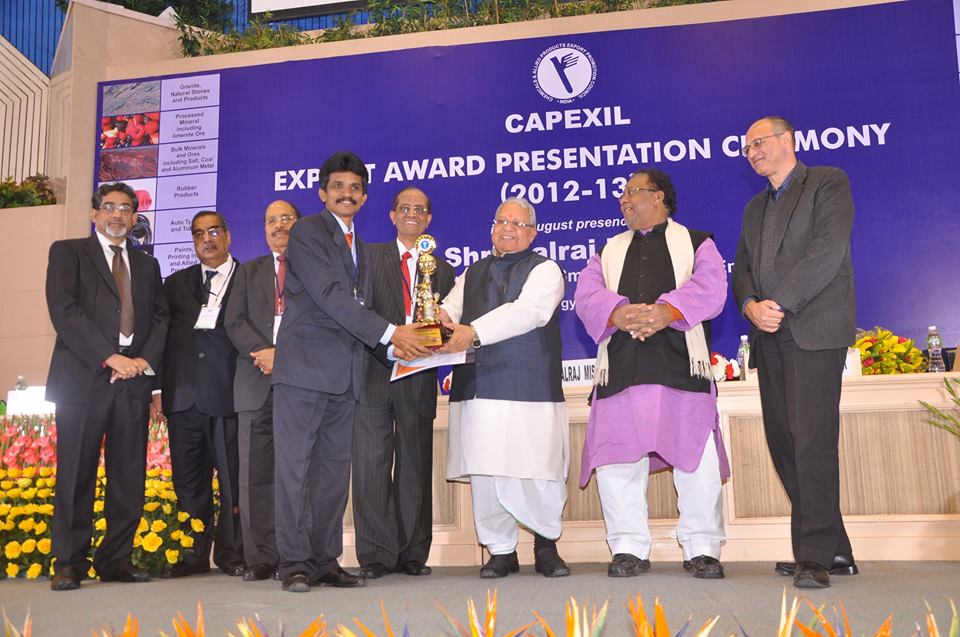
ஜனவரி 28ம் தேதி நடைபெற்ற கேபக்சில் (இந்திய வணிக மற்றும் தொழிற்துறை) சார்பில் புதுடில்லி, விக்யான்பவனில் நடைபெற்ற விழாவில் டிரான்ஸ்வேர்ல்ட் கார்னட் இந்தியா பி லிட் கம்பெனிக்கு மத்திய அமைச்சர் திரு.கல்ராஜ் மிஸ்ரா அவர்கள் சிறந்த ஏற்றுமதியாளருக்கான விருதினை வி.வி.குரூப் சீனியர் மேனேஜர் திரு.சக்திகணபதி அவர்களிடம் வழங்கினார்.

டிரான்ஸ்வேர்ல்ட் கம்பெனி கார்னட் கனிமங்கள் ஏற்றுமதியில் இந்தியாவின் சிறந்த நிறுவனமாக செயல்பட்டு வருகிறது. இந்நிறுவனம் சிறந்த உற்பத்தி முறை , சிறந்த சுற்றுப்புறச்சூழல் பராமரிப்பு, தொழிலாளர் பாதுகாப்பு முறைக்காக ஜெர்மனியை சேர்ந்த TUV நிறுவனத்திடமிருந்து ISO 9001, ISO 14001 & OHSAS 18001 சான்றிதழ்களை பெற்றுள்ளது.

இக்கம்பெனி ஆந்திரா மற்றும் தமிழ்நாட்டில் தொழிற்சாலைகளை நிறுவி, சிறந்த உற்பத்தி முறை மற்றும் வேலை வாய்ப்பு வழங்குவதற்காக தகுதி வாய்ந்த பொறியாளர்கள், புவியியலாளர்கள் உட்பட தேவையான பணியாளர்களை நியமித்து ஏராளமான நபர்களுக்கு நேரடி மற்றும் மறைமுக வேலைவாய்ப்பு வழங்கி வருகிறது. தொழிலாளர்களின் நலனை கருத்தில் கொண்டு இலவச இருப்பிடம், வாகன வசதி, கேண்டீன் வசதி மற்றும் இதர சட்டப்பூர்வ வசதிகளை செய்து தொழிலாளர்கள் நலனை மேம்படுத்திவருகிறது.

இக்கம்பெனி வருடம்தோறும் ஆயிரக்கணக்கான ஏழை மாணவர்கள் கல்வி பயில ஊக்குவிக்கும் பொருட்டு இலவச நோட்டு புத்தகங்களை தமிழ்நாடு மற்றும் ஆந்திராவில் அதன் தொழிற்சாலைக்கு அருகில் உள்ள கிராமபுற மாணவர்களுக்கு வழங்கி வருகிறது .இதன் மூலம் கல்வி வளர்ச்சிக்கு பெரிதும் உறுதுணையாக இருந்து வருகிறது.மேலும் இந்நிறுவனம் தொடர்ந்து பல வருடங்களாக இந்த சிறந்த ஏற்றுமதியாளர் விருதினை பெற்று வருகிறது என்பது குறிப்பிடத்தக்கது.

TGI 1 TGI 2

VV Mineral Becomes Top Exporter for the Seventh Time – Video

V.V.Mineral represented by V.Subramanian, Director, receiving the prestigious “Top Export Award” from Honourable Minister of Micro, Small and Medium Enterprises Shri Kalraj Mishra.

VVM receives this award for the past 22 consecutive years and is the only producer to receive this prestigious Capexil award in the “Bulk Minerals sector” among all Heavy mineral mining companies.


Illegal Monazite Export not possible – AERB Officials rules out

DC-7.4.15

Link : http://epaper.deccanchronicle.com/articledetailpage.aspx?id=2516314

Publication : Deccan Chronicle

Edition : Madurai

Date : 07.04.2015